


Understanding Regional Product Availability in a Global Market
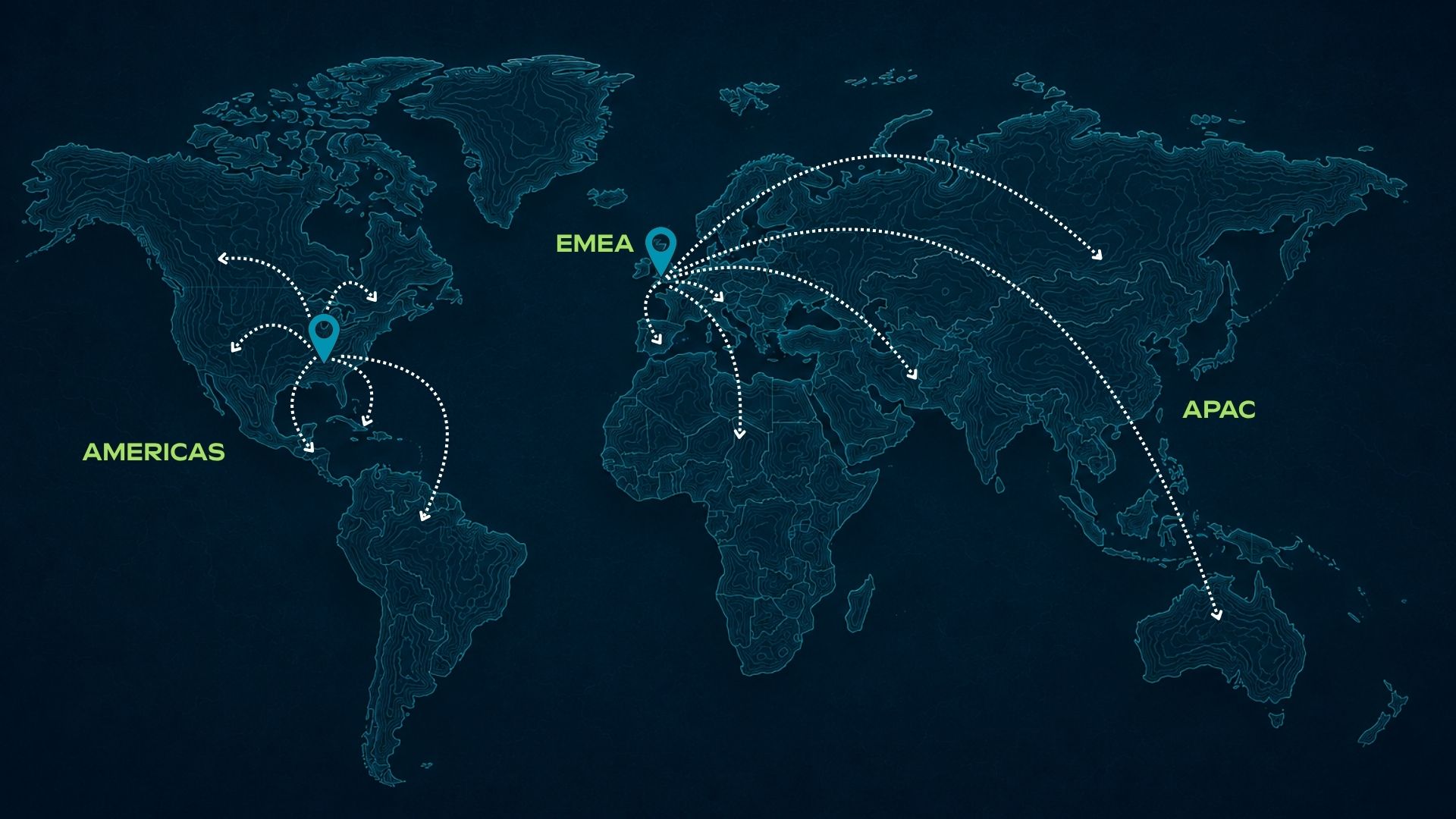
One of the most common questions we hear is why certain products are available in the Americas but not in Europe, Middle East and Africa (EMEA) or the Asia Pacific (APAC) region, or vice versa.
It’s a fair question. As businesses operate across multiple countries and regions, it is easy to assume that product portfolios should look the same everywhere. In reality, product availability is influenced by a variety of factors.
While many solutions are available globally, others are developed or positioned to meet the specific needs of a particular region. Understanding those factors helps explain why product portfolios can vary from one market to another.
Different Markets, Different Priorities
To understand why product availability differs, it helps to first understand how global markets are organized. The Americas region includes North America, Central America, South America, and the Caribbean. EMEA/APAC includes Europe, the Middle East, Africa, Asia, and the Pacific region, which includes Australia and New Zealand.
Most products are available globally, but some are only available in specific markets. There is rarely a single reason why that is.

Regulatory requirements can either relate specifically to products being sold into a region or may be laws that dictate how our customers operate. For example, in the United Kingdom, there are strict rules in place related to the disposal of feminine hygiene products that must be adhered to. Regulations can influence everything from product formulations and packaging to environmental considerations and product design. As regulations evolve, manufacturers often adapt products and product portfolios to remain aligned with local requirements.

Customer expectations are not always the same from one market to the next. In some regions, sustainability may play a larger role in purchasing decisions. In others, servicing efficiency or maintenance intervals may be higher priorities.

Sustainability continues to influence product development across many industries. Organizations are paying closer attention to the materials used within products, how those products are disposed of, and how they support broader environmental goals. As these priorities evolve, manufacturers often explore new materials and technologies that can deliver the same performance while supporting changing sustainability expectations.

Market demand also plays an important role. Facility types and regional preferences can influence what products gain traction within a market. In many cases, product availability reflects where a solution provides the greatest value to customers.
Together, these factors shape how product portfolios evolve across different regions.
Innovation Shaped by Regional Needs
The V-Air® passive aircare range provides a useful example of how regional priorities can influence product development.
In the Americas, V-Air® Solid provide 60-day fragrance delivery through patented multi-phasing technology. The refill utilizes a gypsum shell and gel core that support controlled fragrance release over time and remains a highly effective solution across a wide range of commercial environments in this region.
In EMEA/APAC, customers have access to V-Air® Solid Evolution. Built on the same 60-day passive fragrance platform and patented multi-phasing technology, Evolution incorporates an EVA shell and seaweed-derived core that reflects growing interest in alternative materials and more sustainable product design.
One factor influencing this evolution is the increased focus on end-of-life disposal considerations within the UK and Europe. Gypsum-containing products can require more specialized disposal processes, making material selection an increasingly important part of product development and procurement decisions.
V-Air® Solid Evolution was developed to deliver strong fragrance performance while aligning more closely with the sustainability priorities and waste management considerations influencing many markets throughout EMEA/APAC.
Both products achieve the same core objective. The difference lies in how each solution evolved to support the needs and priorities of the regions they serve.
Why It Matters
For organizations operating across multiple countries, understanding regional product availability can help avoid confusion during product specification, procurement, and implementation.
A product available in one region is not necessarily absent elsewhere because of performance or capability. More often, regional portfolios reflect the unique requirements of the markets they support.
Regional Support, Global Standards
Product availability may vary by region, but access to knowledgeable support remains just as important. Through our Global Network and Distribution, customers are supported by regional teams and distribution partners who understand the unique needs of the markets they serve.
Beyond supporting customers through our distribution network, we also collaborate with businesses looking to develop custom fragrance programs, private label solutions, and OEM products tailored to their unique requirements. By combining customer insights with technical expertise, these partnerships help create solutions that align with specific market opportunities and business goals.
Finding the Right Regional Support
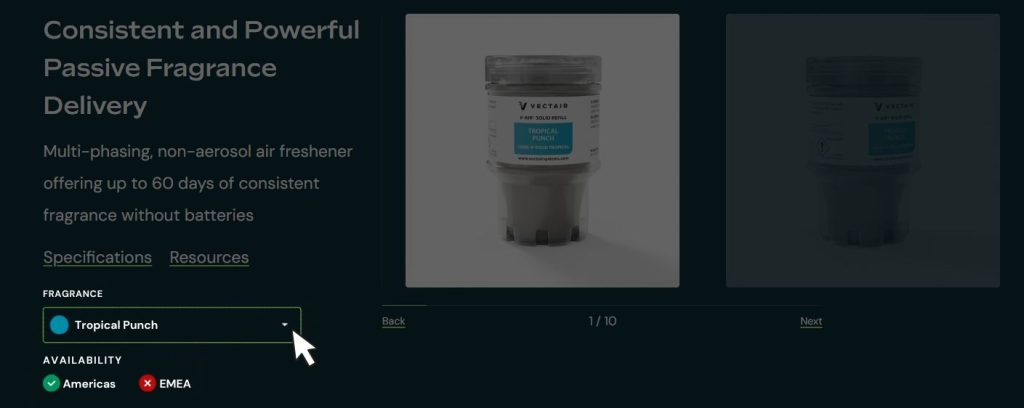
When questions arise about product availability, product pages on our website are a great resource. Each page has product availability listed in the top section, bringing up a green check mark or red “X” to indicate it’s availability in that region once a fragrance or color choice has been selected.
Additionally, regional teams are also a good source of guidance. They understand the regulations, customer expectations, and product portfolios specific to their market. If you have questions about product availability or support within your region, connect with your regional Vectair team. They’re best positioned to help identify the solutions available to you.
